Making fast, pressure-sealed thermocouple probes
The espresso machine has floated back up to near the top of projects I feel like messing around with. One of the things that didn’t work well with my bench setup was water temperature control. There were a few hardware reasons why I couldn’t get the temperature control to be fast:
- The RTD temperature probe in the water stream was very slow. I used this probe because it was convenient to plumb in, with an NPT fitting on but it was physically large and high thermal mass.
- The water heater was bad. It had high thermal mass, and the enclosed water volume was large, meaning water took a long time to pass from the inlet to the outlet, adding significant delay.
There are ways to get around slow water heater response, like mixing hot and cold water streams with multiple pumps or a mixing valve (which I plan on doing with 2 pumps down the line), but a fast temperature sensor is mandatory for fast temperature control.
From what I can tell, the Decent espresso machines use a temperature sensor like these (or at least a very similar package), which are convenient cartridges seal-able with an o-ring in a counterbore. But the time constant is 1.5 seconds. I’d love to get the temperature sensor fast enough that I don’t really have to think about it, so at least an order of magnitude faster.
The “easy” answer here is using a very small thermocouple. Thermocouple wire can be had in down to 40AWG or even smaller. The challenge is that I don’t want the TC to be directly in the water (corrosion & metals I don’t want to drink), and the sensor needs to be sealed to ~200 PSI.
Surely sealed, tiny TC probe is a thing I can buy off the shelf, right? It turns out yes, but they’re a few hundred dollars per sensor. This was the smallest I could find, 0.2mm diameter(!) and $300 apiece.
How hard could it be to make something similar? The off-the-shelf probes are sealed by either welding the tip of the TC junction to the stainless steel hypodermic needle tube, for the “grounded junction” variety, or potting it in with adhesive for the “ungrounded” ones.
My first idea was soldering the TC into a hypodermic needle tube with a food-safe solder. This did not work at all. The surface tension of the solder was much too high to get it to wick down a 0.3mm needle bore. Maybe with enough heat this could work, but I gave up.
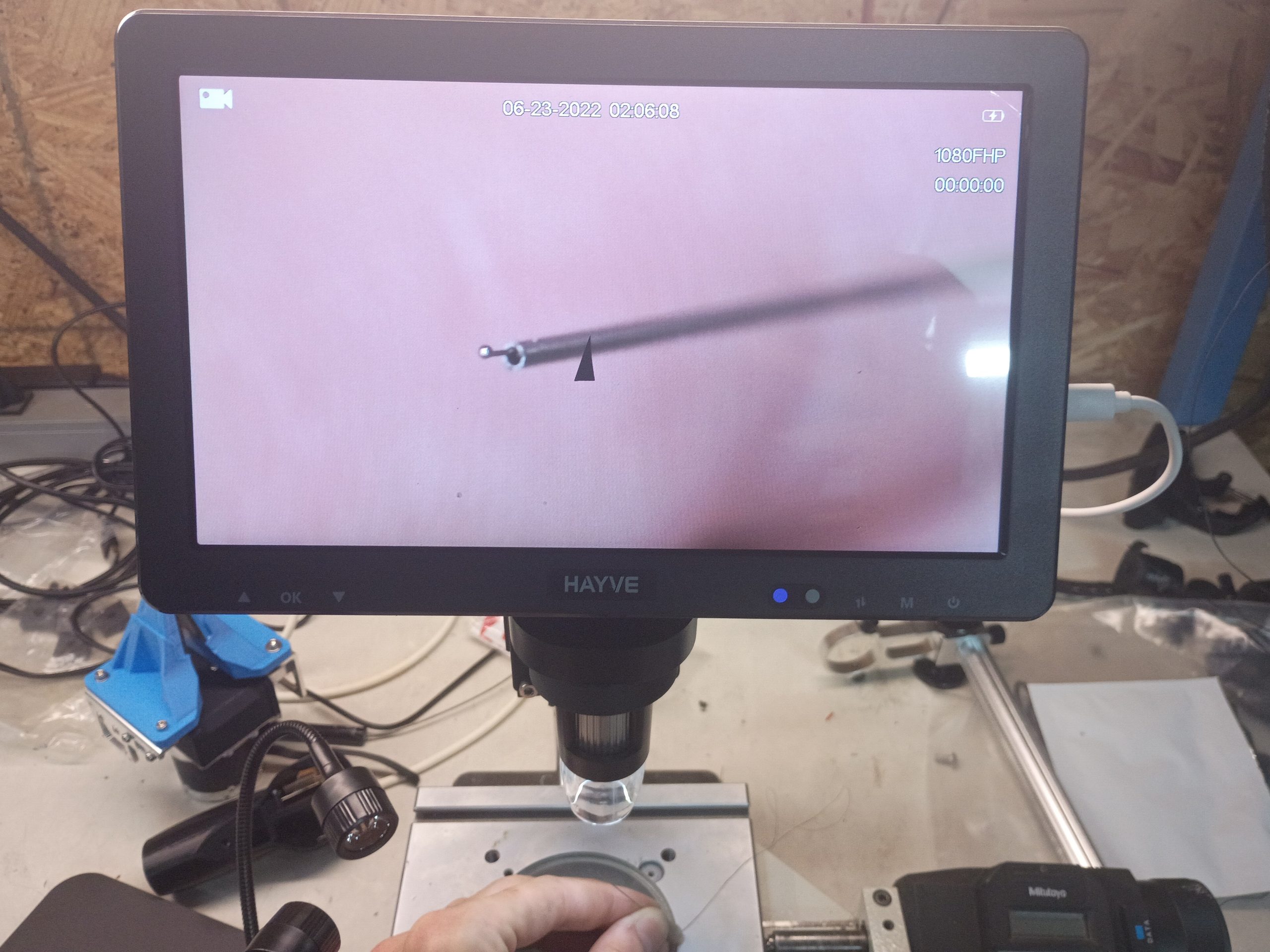
For the next attempt I tried epoxy-potting the TC into the needle. I started with a luer-lock needle tip, and fed the TC down the back-side of the needle under a microscope.
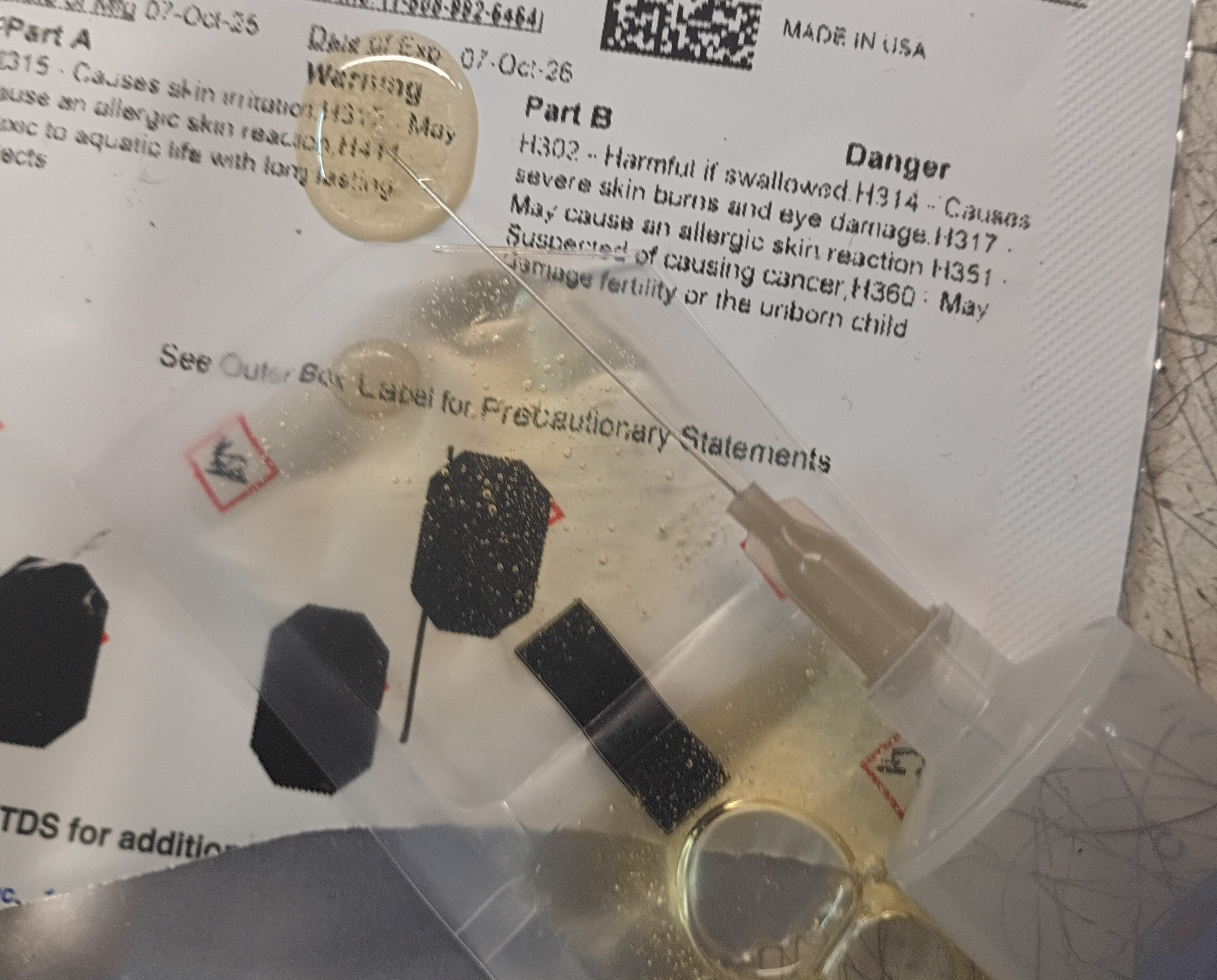
After fishing the TC down the needle, I installed the needle in a syringe, with the TC wire coiled up in the syringe body. I stuck tip of the needle into a pool of heat-cure epoxy from Ethan, and used the syringe plunger to pull a vacuum, drawing epoxy down the needle. Ignore the health warnings, this is just a prototype for testing :)
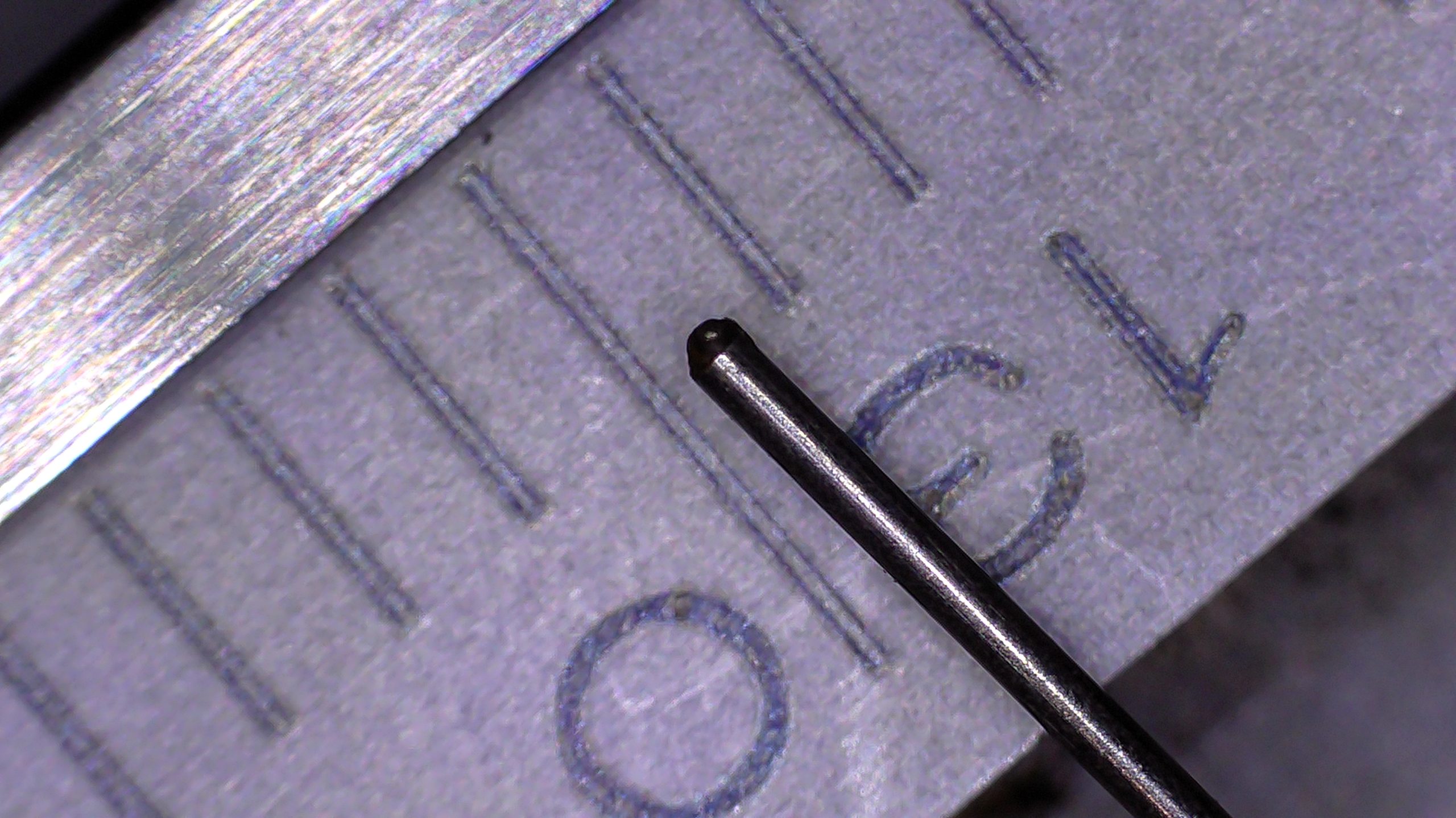
This worked surprisingly well. Here’s the tip of the potted TC under a microscope. 1mm ruler ticks for size reference:
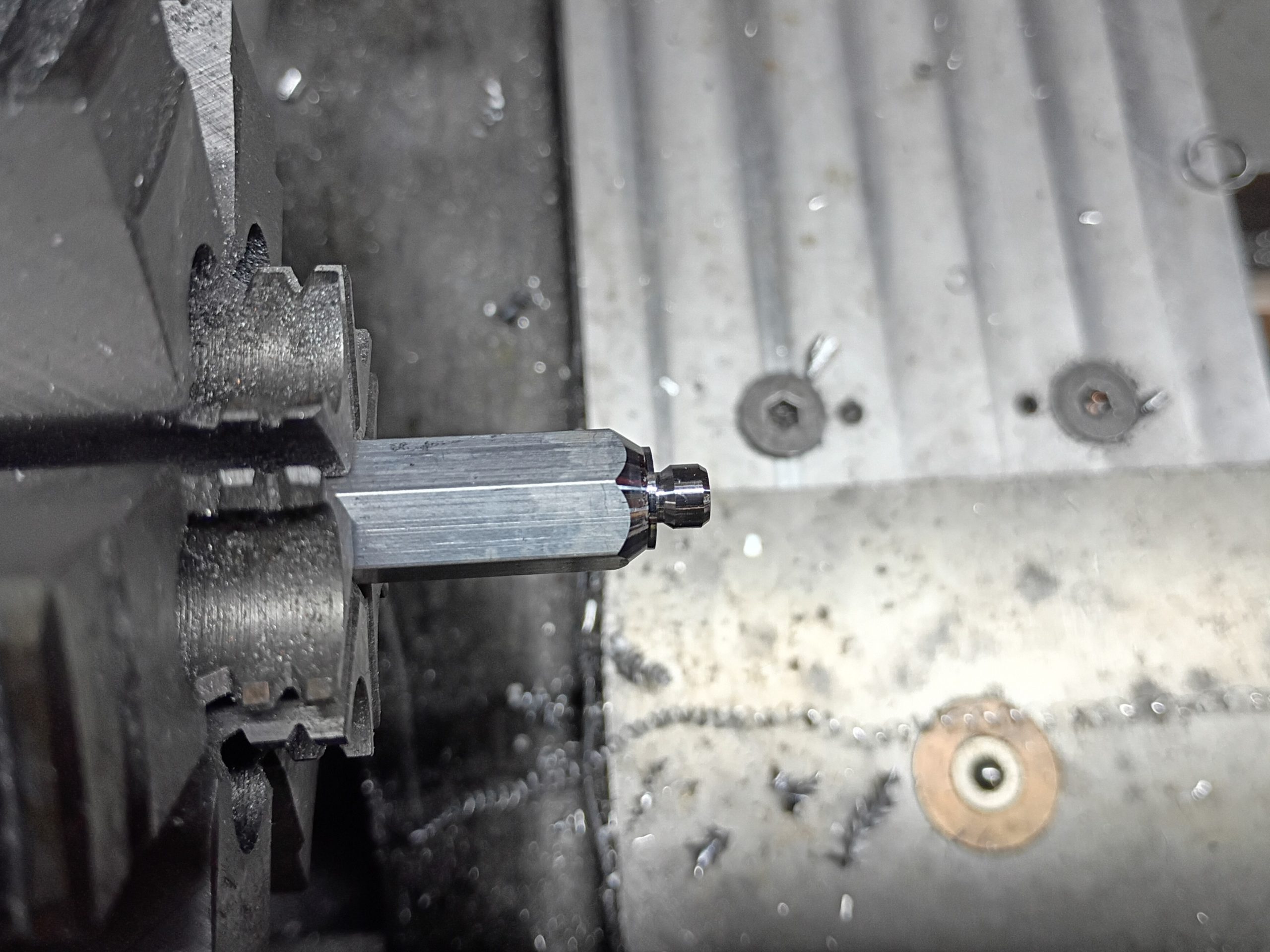
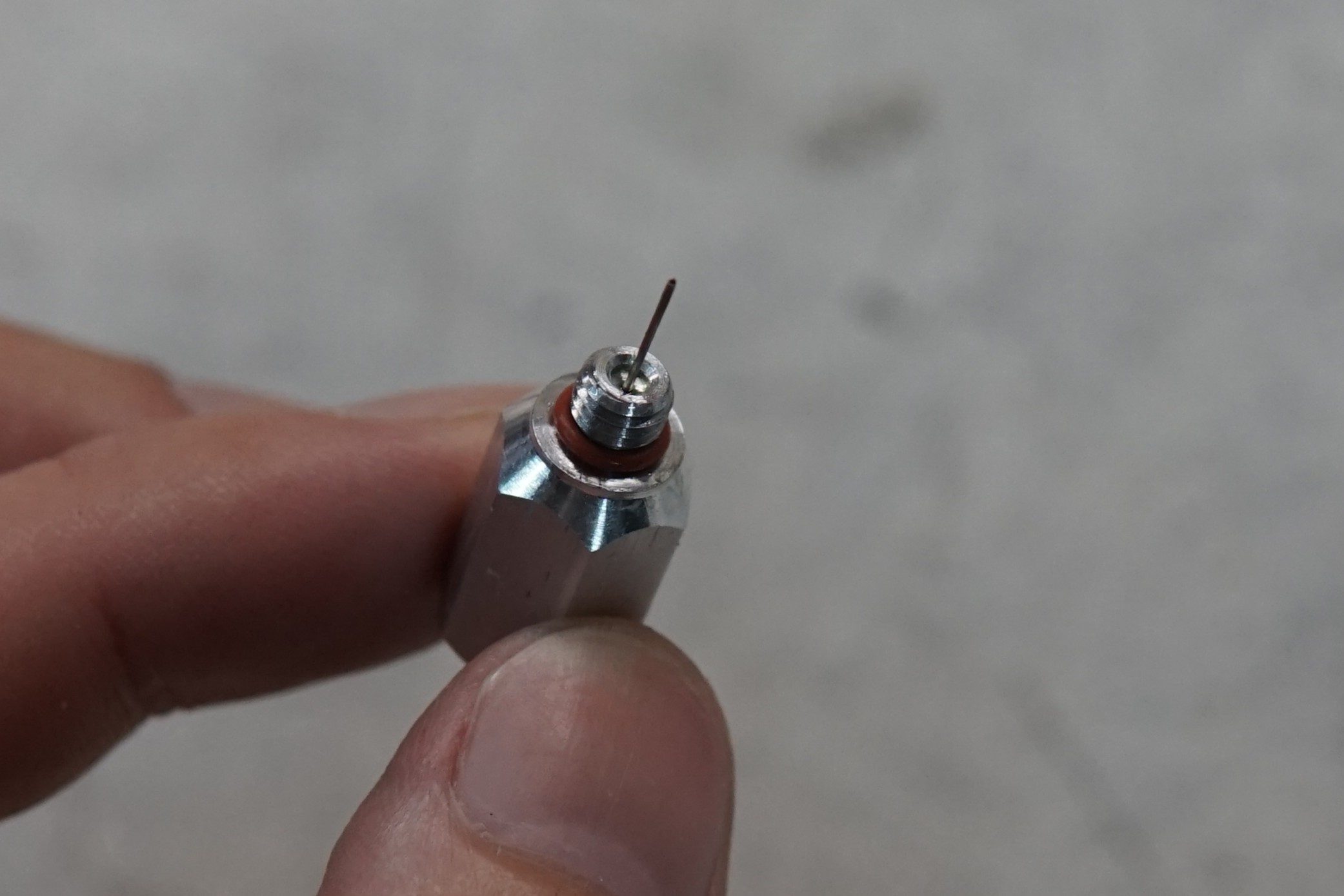
A needle alone isn’t a very useful form-factor, so I made some fittings that thread into ports on the heater. I turned these out of 10mm aluminum hex bar:
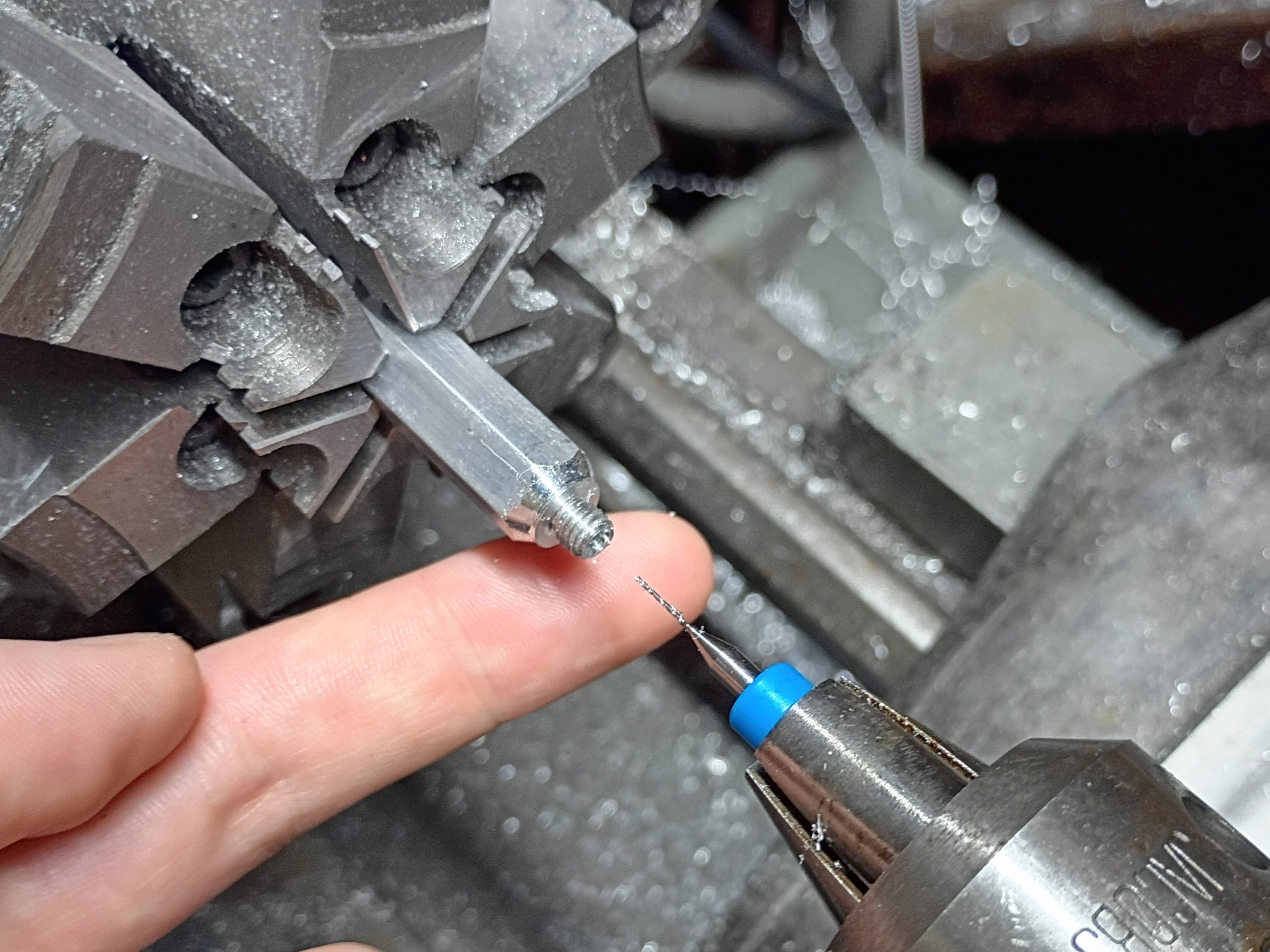
Needle clearance was drilled out with a 0.4mm PCB drill. I did this drilling with the carriage on my lathe and an Aloris AXA-35 drill chuck: using the carriage (vs tailstock) gives a much better feel for tiny drills, and a DRO depth readout.
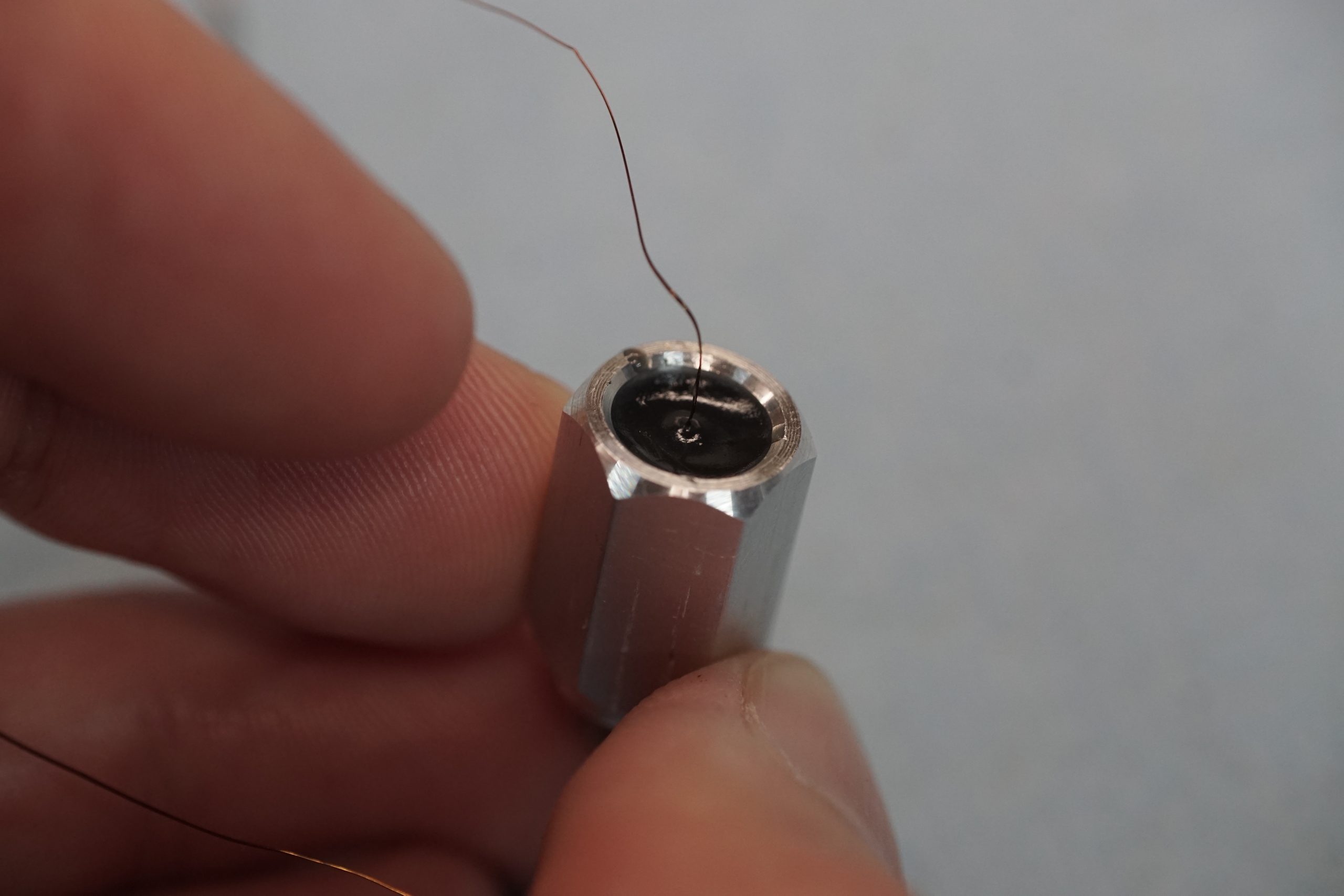
The backside of the fitting got bored out, and needle bonded in with retaining compound. Once that had cured, I back-potted the fitting with a structural epoxy:
An o-ring on the nose-end of the fitting forms a corner crush seal with a countersink in the mating part.
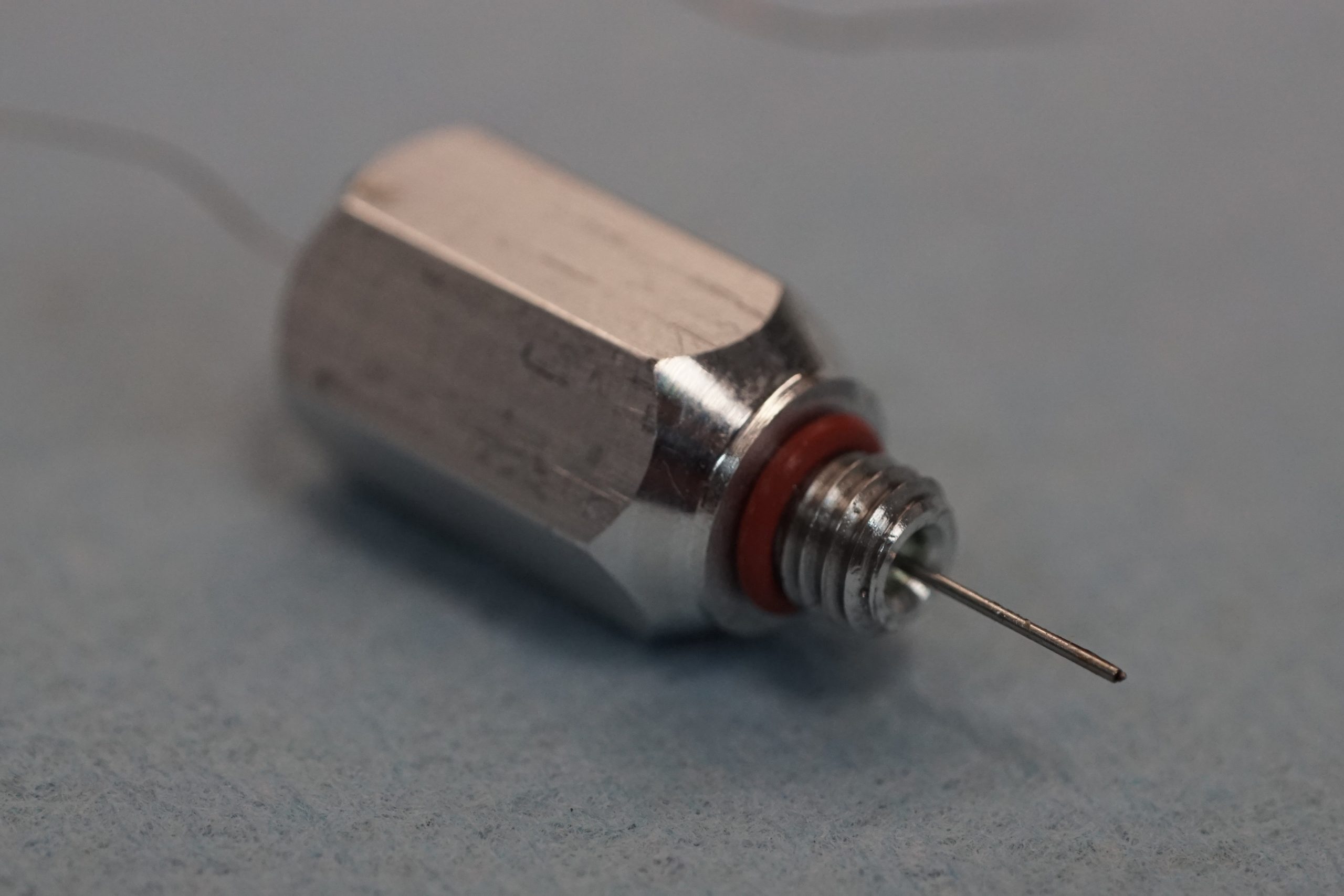
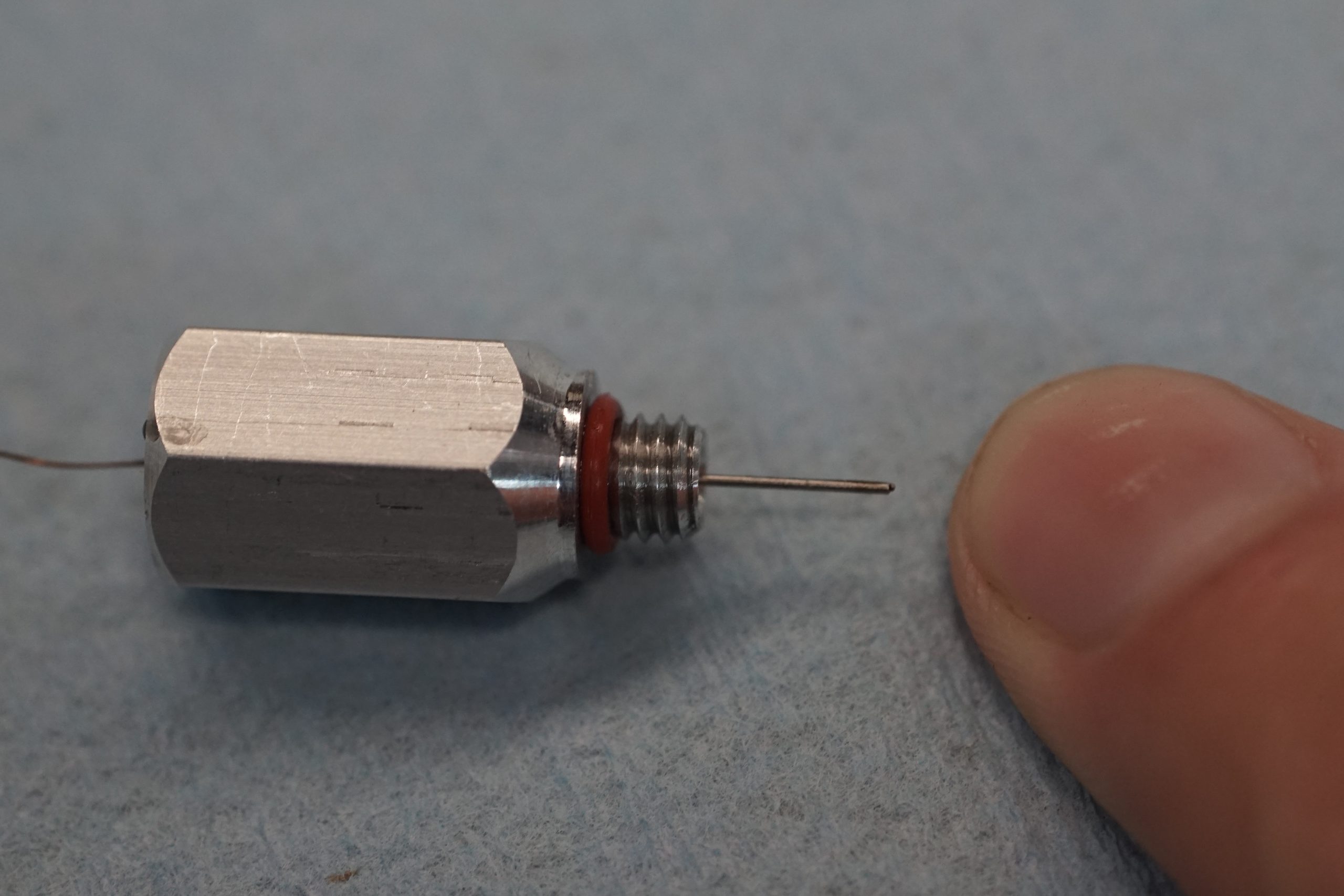
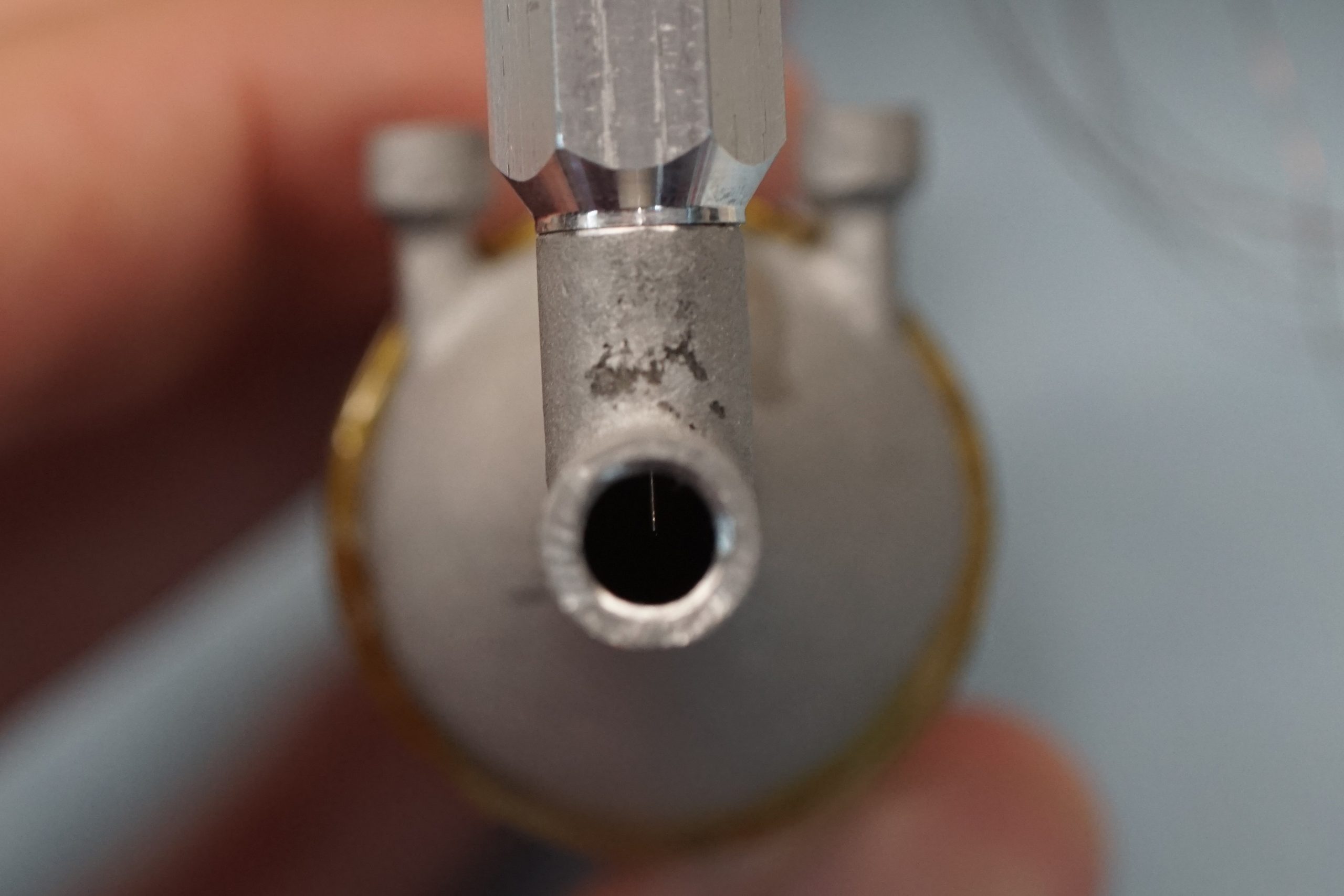
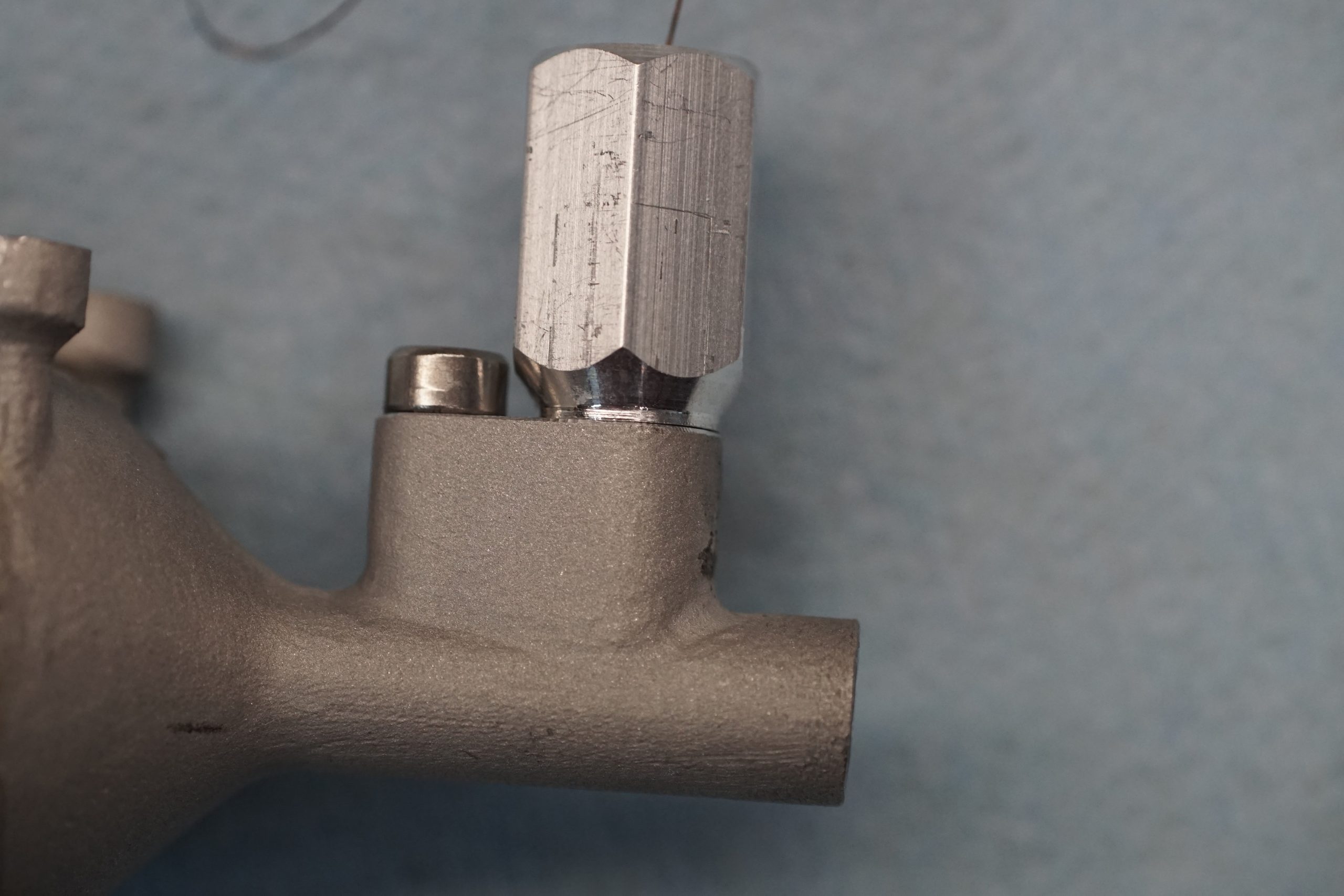
And here’s how the sensor sits in the flow in-situ:
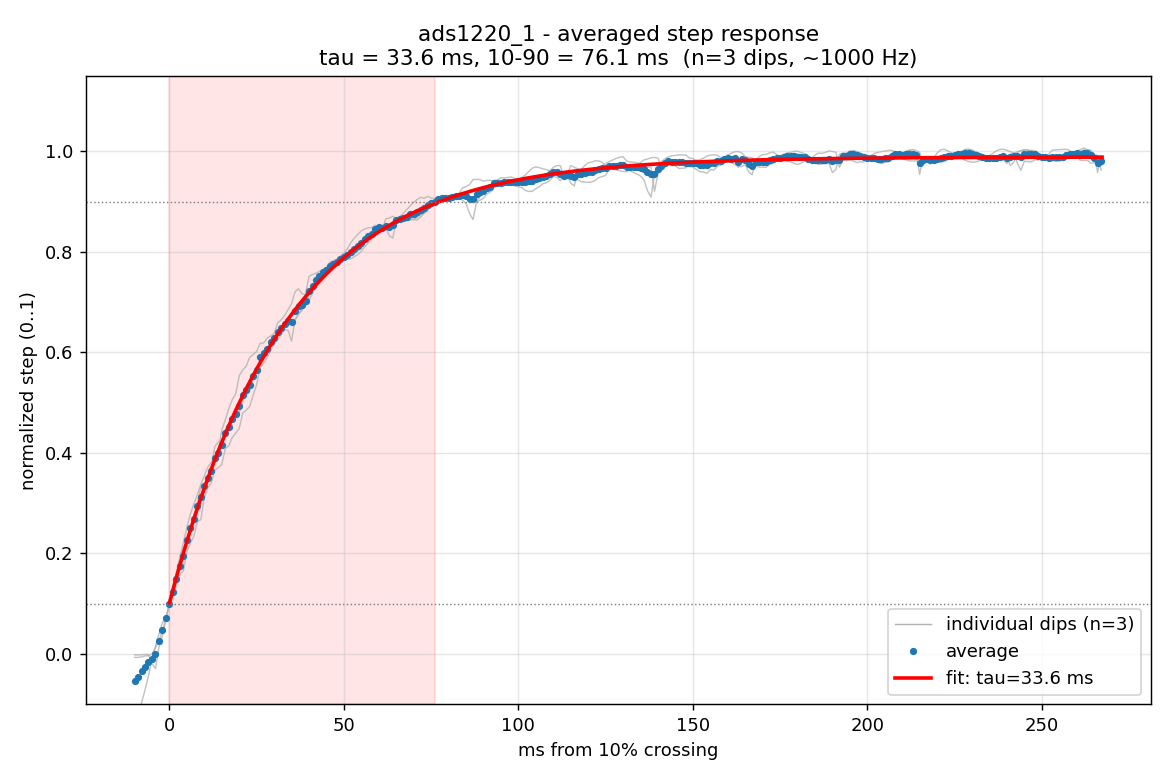
So, how fast is the final sensor assembly? I tested by dunking the probe tip in a cup of warm water and looking at the step response. I did the same with a bare TC to see how much the needle + potting slows things down.
The bare sensor has a ~5ms time constant:
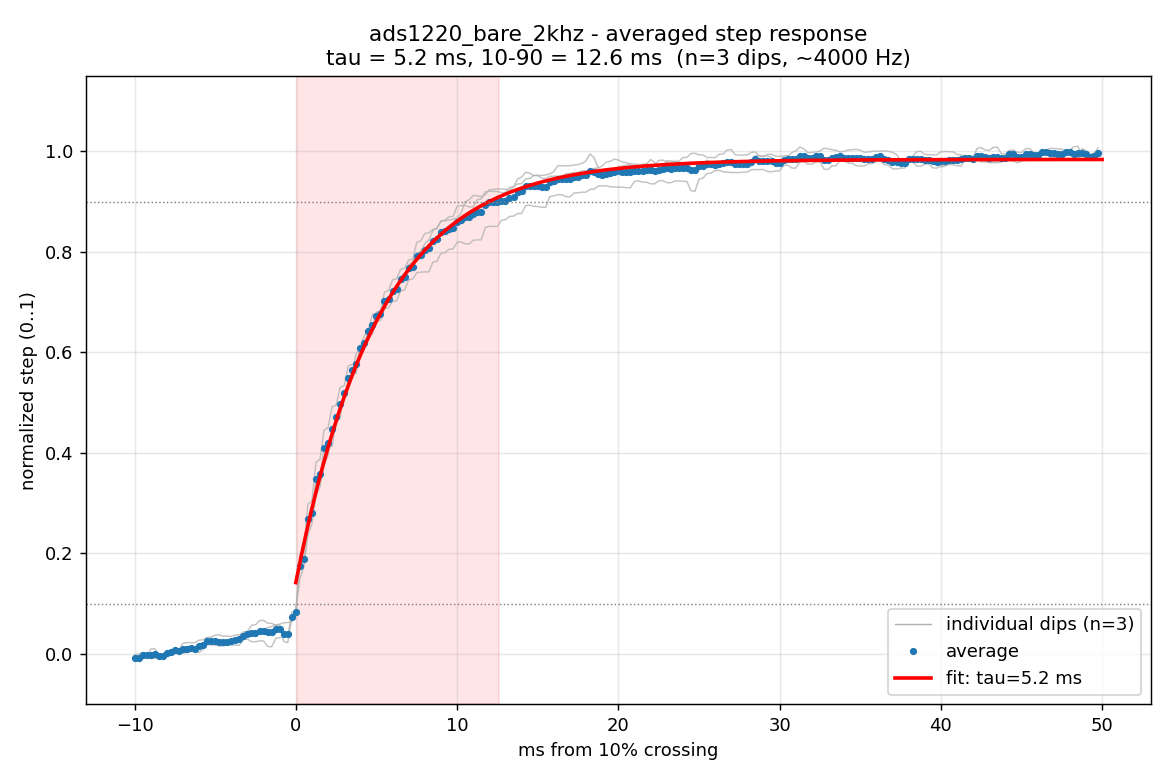
The potted probe has a ~34ms time constant. Much slower, but definitely fast enough to be useful. I was hoping for somewhere under 100ms.
Next up, the actual water heater these sensors get installed into.
Comments